Author: RSS Feed

  • Jermaine Dupri Got Boss Advice From A Surprising Source

    Essence Magazine:

    LISTEN to Jermaine’s episode of ESSENCE Podcast Network’s UnBossed Podcast here:

    What does it really take to become a boss and get the recognition you deserve? Writer, rapper, producer, and music executive Jermaine Dupri kept it 100, when digging into the answer to just that.

    Dupri credits his father, Michael Mauldin—a veteran Columbia Records executive who shaped some of the greatest names in music—with teaching him the basics of being a boss.

    “When I was super young… that’s [when] I got to be more with my dad and watch him do what he do. But it was more or less about his relationships at that point,” Dupri reminisced with UnBossed host, Marquita Harris at the 2019 ESSENCE + New Voices Entrepreneur Summit in Atlanta, Georgia.

    “He was working with multiple artists that were in the city, like the S.O.S Band and the Brick, Peabo Bryson and just… different relationships, that’s [what] I watched. I think I gained some of that from him. It’s just being able to be in the presence of everybody.”

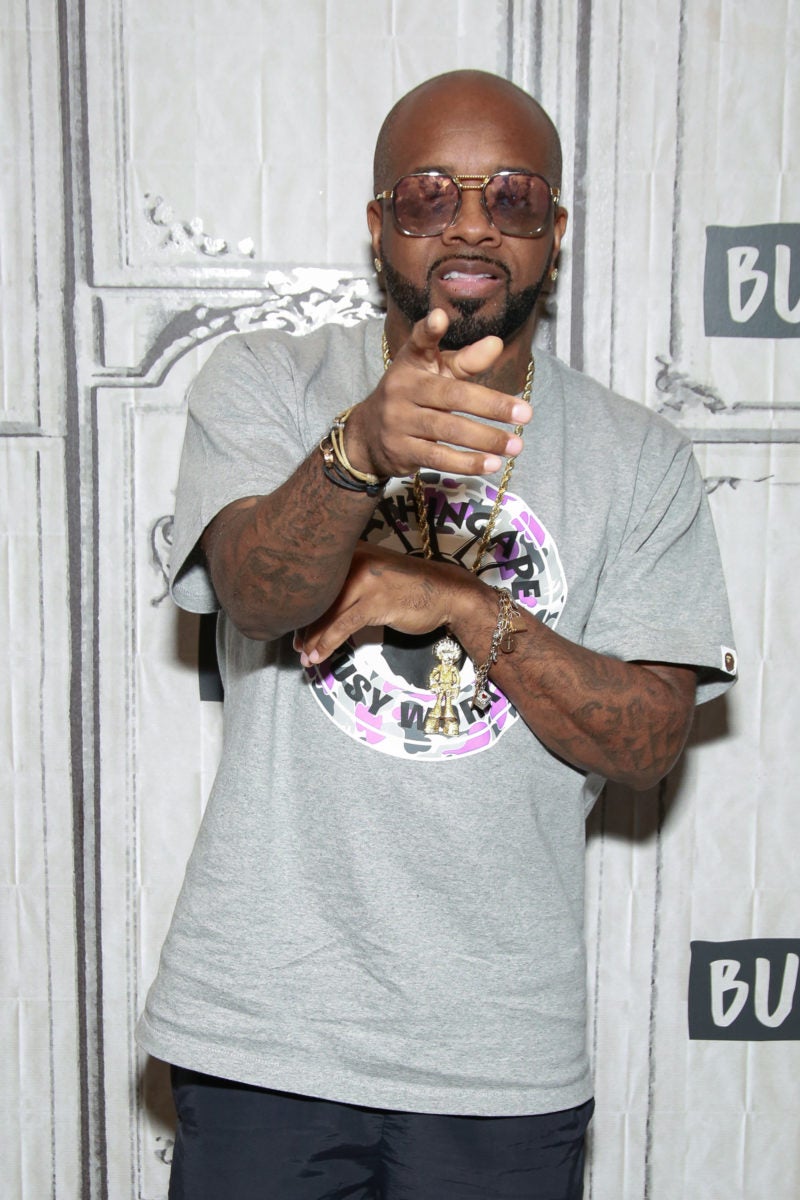
    NEW YORK, NY – JULY 11: Jermaine Dupri at Build Studio on July 11, 2019 in New York City. (Photo by Jason Mendez/Getty Images)

    Dupri’s knack for growing relationships and artists has garnered international renown and classic collaborations with some of the biggest bosses in the business…like legendary soul singer Aretha Franklin.

    In this episode, the music legend gives an honest look into:

    …THE ADVICE ARETHA FRANKLIN GAVE HIM ON BEING A BOSS

    “Aretha, she let me know. ‘You’re the producer. I’m the singer.’ She’s like, ‘If you ain’t going to say nothing, I’m going to go home and cook.’ And I was like, “Oh, okay.” She didn’t want me to treat her like Aretha Franklin, she wanted me to treat her like I just met her and tell her exactly what I wanted. And that put me in my mindset to know that when I’m in the studio, no matter who I’m in the studio with, that’s my position.”

    …WHAT IT TAKES TO BE A WELL-KNOWN BOSS

     ” …If you feel like you need to tell people you have value, then you haven’t done enough. That’s just what I think. You haven’t shown them your value.” He continues, “I’ve been in that position before where I felt like people don’t appreciate the person that I am. And I had to ask myself, “What am I doing? What am I not doing to show people who [I am]?” And at that time I found that I was being too mysterious about what it is that I do.”

    …HOW HIS CAREER GREW TOWARD MUSIC

    “It was like one thing that led to the next. I started dancing first and then the dancing led to me just learning music, but then it was like a time period. I had all these ideas and I was asking people to do things for me and they weren’t bringing it to life the way I wanted it to happen. That just drove me insane and they showed me to basically start doing it myself.”

    You can hear the full episode of ESSENCE Podcast Network’s UnBossed on Apple PodcastsSpotify or anywhere you listen to podcasts.

    The post Jermaine Dupri Got Boss Advice From A Surprising Source appeared first on Essence.

  • Curator Chaédria LaBouvier Calls Out Guggenheim For White Supremacy

    Essence Magazine:

    The Guggenheim’s first Black curator Chaédria LaBouvier is calling the New York City museum out for not acknowledging her historic feat last year when she became the first Black person to curate a solo exhibition inside their halls.

    And it just so happens LaBouvier called them to the carpet as the museum attempted to participate in Blackout Tuesday, a day created by two Black executives in the music industry, urging companies to call out racism and discrimination as millions around the world are protesting police brutality after George Floyd’s murder.

    After The Solomon R. Guggenheim Museum tweeted that they were “observing Blackout Tuesday” and standing “in solidarity with those demanding justice and an end to racism,” LaBouvier replied in her own tweet: “Get the entire f-ck out of here. I am Chaédria LaBouvier, the first Black curator in your 80 year history & you refused to acknowledge that while also allowing Nancy Spector to host a panel about my work w/o inviting me Erase this shit. Please RT.”

    Get the entire fuck out of here. I am Chaédria LaBouvier, the first Black curator in your 80 year history & you refused to acknowledge that while also allowing Nancy Spector to host a panel about my work w/o inviting meErase this shit.Please RT. https://t.co/LH7YYWcLT5

    — No Quarter Will Be Given (@chaedria) June 2, 2020

    She continued, “This is the same museum that made up an IMAGINARY designation of ‘first solo Black curator’ b/c they were too afraid to admit that they had not hired a Black curator to lead a show in 80 years and erased me and history in the process. They are full of shit.”

    ESSENCE reached out to reps for the Guggenheim along with Spector, but haven’t heard back yet.

    LaBouvier made history last year with her exhibit, “Basquiat’s ‘Defacement’: The Untold Story” that explored Jean-Michel Basquiat’s art and activism in a 1980s New York City.

    The curator was vocal then about issues she had with the exhibit’s roll out, and Guggenheim’s COO Elizabeth Duggal, including not being allowed to oversee the deinstallation process, which is typically a part of a curator’s duties; having no input during the creation of a digital audio guide and playlist; and being allegedly shut out from a panel publicizing the exhibit.

    ESSENCE reached out to Duggal, but hasn’t heard back yet.

    It went down at the Guggenheim! @chaedria is the first Black curator toexhibit with the institution with her show Basquiat: Defacement The Untold Story. They left her off the panel and….. pic.twitter.com/UjM5NlpBRz

    — bad news women (@badnewswomen) November 6, 2019

    In fact, LaBouvier showed up to the panel last November to say, in essence, the museum had used her.

    “What has gone down is so violent. It’s so violent,” she said last year, “and it’s meant to be that way. And of course it’s an institution that condones and looks the other way but there’s also a very traceable step of how that happens.”

    Duggal responded that night, saying that the panel had been planned “a long time ago” and doesn’t always include an exhibition’s curator. She also addressed LaBouvier directly.

    “Your work is much appreciated,” she said then. “We do really respect and honor your work and everything that you’ve done.”

    The post Curator Chaédria LaBouvier Calls Out Guggenheim For White Supremacy appeared first on Essence.

  • Travis McMichael Said ‘F–king N–ger’ After Ahmaud Arbery Was Shot

    Essence Magazine:

    Turns out Travis McMichael, one of the men charged in the murder of Ahmaud Arbery, said a racial slur even as Arbery lay on the ground dying from the shotgun wounds he sustained.

    This information came to light during a preliminary hearing on Thursday morning for Gregory Michael, 64, and his son 34-year-old Travis McMichael.

    According to NBC News, Georgia Bureau of Investigation Special Agent Richard Dial said that another defendant in the case, 50-year-old William “Roddie” Bryan, who recorded Arbery’s brutal killing, heard the younger McMichael declare “F–king N–ger” after Arbery had been shot.

    The McMichael’s are both facing charges of felony murder and aggravated assault for their role in Arbery’s death. Bryan, the duo’s neighbor, who was arrested two weeks later but was not present at the hearing is facing charges of felony murder and attempted false imprisonment.

    Attorney S. Lee Merrit shared video of the agent’s testimony, noting the use of the slur.

    “[Arbery’s] parents are doing their best to maintain their composure as we get through all the horrible details of their son’s murder,” he wrote on Twitter.

    #AhmaudArbery’s parents are doing their best to maintain their composure as we get through all of the horrible details of their son’s murder. pic.twitter.com/K9VMA0vdpz

    — S. Lee Merritt, Esq. (@MeritLaw) June 4, 2020

    Merritt called for this information to “be instructive to the FBI Investigation into Federal Hate Crime Charges.”

    GBI investigators learned Travis McMichael shouted “fucking nigger” while standing over #AhmaudArbery’s body after they made the decision to arrest.This new evidence should be instructive to the FBI investigation into Federal Hate Crime Charges.

    — S. Lee Merritt, Esq. (@MeritLaw) June 4, 2020

    Last month, the DOJ announced that it would be investigating Arbery’s death as a hate crime, as well as investigating the two district attorneys who recused themselves from the case due to connections to the McMichaels.

    The post Travis McMichael Said ‘F–king N–ger’ After Ahmaud Arbery Was Shot appeared first on Essence.

  • We Asked You To Remember Who Did It First And You Did Not

    Essence Magazine:

    Anifa Mvuemba, designer of the luxury label Hanifa, presented her collection Pink Label Congo on May 22nd — just shy of 2 weeks ago. In the midst of the pandemic many brands are scurrying to pivot while stay at home orders and social distancing remain in place and the fate of September fashion week remains unknown. However, last month the DMV designer announced that she would be showing her latest collection via a live streamed 3D virtual experience

    Today, Forbes published an article championing a Prada-backed AI startup Bigthinx, in partnership with Fashinnovation, stating the startup “will live stream the first fully digital 3D Virtual Fashion Show (including digitised human models) since the coronavirus pandemic forced the fashion industry online,” when indeed that is untrue. Anifa, a Black woman just did it.

    “This will be the first time many fashion professionals have seen virtual fashion since the industry-wide discussions about implementing it ramped up, following the coronavirus-induced lockdown,” the article continues. Somehow so many of us (roughly 10,000 people) saw it happen just 13 days ago, but it slipped under the radar of Forbes, who previously featured Anifa for her cultivating the intersection of fashion and versatility. In fact many publications including Teen Vogue, Harpers Bazaar and Afrotech took note of the groundbreaking imprint Anifa made on the fashion industry that night.

    Not only did Anifa flawlessly execute a virtual experience featuring a size inclusive model lineup, the collection was available for purchase at the conclusion of the show. A collection which is now sold out. Astonished by the unbelievable execution and innovation virtual viewers witnessed, some called for publications including Forbes to feature her. A feature that happened, which makes this even more ironic.

    This morning upon publication, marketer and podcast co-host Joymarie Parker called out Forbes for not giving Anifa credit. The outpour of understandable disdain for said erasure and support for Anifa swiftly overcame Twitter. Various users called for lawsuits and trademarks, for which Anifa humbly responded that she has an amazing attorney who will handle the situation on the backend.

    This is false @Forbes. A 29-year old Black woman (@AnifaM) did this on May 22 for @officialHanifa. This was covered by @harpersbazaarus @TeenVogue @Essence and others. The lack of due dillegence here is irresponsible. Give credit where credit is due. https://t.co/D4BPiI14bk

    — Joymarie Parker (@heymissparkerr) June 4, 2020

    We have an amazing attorney. There are things happening on the backend. That I chose not to share.

    — + (@AnifaM) June 4, 2020

    The erasure of a Black woman, in the name of a company backed by Prada who used outrage marketing with its imagery of

    The post We Asked You To Remember Who Did It First And You Did Not appeared first on Essence.

  • The Daily 202: Protests spark intense debates over the proper role of the military, media and police in American life

    Washington Post – Politics:

    The Pentagon is in damage-control mode as Mattis tees off, and the New York Times faces a rebellion.

  • Da Brat Reveals Why She Came Out After More Than 20 Years

    Essence Magazine:

    Who doesn’t stan a queen who does things on their own terms? And that’s exactly what Da Brat did earlier this year when she broke the internet by announcing she was in a relationship with Kaleidoscope Hair Products CEO, Jesseca Dupart. 

    The Growing Up Hip-Hop Atlanta star told Variety that she “always felt like being private is the better way to go,” but compromised on sharing her love publicly since her girlfriend openly shares her life on social media.

    “My partner is a social media mogul, and when you get with somebody, you have to meet in the middle,” she added. “I was like, ‘Oh shit, I just came out after 20-something years!’”

    View this post on Instagram

    ❣ yep …..

    A post shared by Jesseca Dupart💁🏽‍♀️ (@darealbbjudy) on Mar 25, 2020 at 7:43pm PDT

    Though many fans were not in the least bit shocked — due to speculation for many years — that didn’t stop everyone from expressing love and support to the rapper for such a momentous occasion.

    “The reaction made me feel like, ‘Why didn’t I do this shit years ago?’” she said, adding that people had known all along. “There were some people saying, ‘We knew it.’ Well, good for you! Now I know it, and I’m able to say it. I did this on my own terms.”

    All it took was for Da Brat to find that special someone who made her feel open and complete.

    “We just complement each other,” she said of Dupart. “Some of my exes wouldn’t be able to take how social media drags people — the hate and the trolls. But this one that I got now? She’s built for it. She teaches me.”

    Brat, whose birth name is Shawntae Harris, added: “So I’m learning, and when you have a partner that you can learn from, grow with, who inspires you? I love that.”

    And for the naysayers who might complain that this should’ve happened a long time ago, the So So Def artist said that coming up as one of few female rappers in the 90s, it was taboo to explore that part of her sexuality.

    “It’s still tough for female MCs, producers and writers if you don’t have the support of a major male artist backing you — or if you’re not super-duper sexy and have some big titties and a nice ass and can twerk,” Brat said. “You can’t go in there looking [tough] like I did [back in the day] and be like: ‘I’m a rapper.’ They’re going to say, ‘Let’s get you out of those tomboy clothes and dress you up in a teddy.’”

    Da Brat attends WE tv “Power, Influence & Hip Hop: The Remarkable Rise Of So So Def” celebration and Season 3 of “Growing Up Hip Hop Atlanta” at The London West Hollywood in West Hollywood, California.

    “But that changes who you are — and then your rhymes start changing because you look different,” she continued. “Then you’re not so relatable because you’re not being yourself anymore. Now you’re somebody else. Who are you?”

    Da Brat said she hopes to inspire anyone coming to terms with their sexuality or finding their gender expression: “To me, Pride is loving myself and not making excuses for anything: Live in your truth.”

    “If I can inspire someone or help somebody to deal with their issues and their sexuality,” she said, “then I’m here for it.”

    The post Da Brat Reveals Why She Came Out After More Than 20 Years appeared first on Essence.

  • Americans are more likely to see wealth as an advantage than race — but the two are tightly linked

    Washington Post – Politics:

    A new poll makes clear that people see wealth as an advantage. But wealth itself is often a function of race.

  • Manuel Ellis: Black Man Died From Lack Of Oxygen, Being Restrained While In Police Custody

    Essence Magazine:

    Manuel Ellis died while in police custody in Tacoma, Washington mere weeks before George Floyd died pleading, “I can’t breathe” after officers with the Minneapolis Police Department kneeled on his neck and back.

    According to the New York Times, like Floyd, Ellis pleaded “I can’t breathe” during the incident on March 3.

    An autopsy released on Wednesday has revealed that Ellis, 33, died as a result of oxygen deprivation and the physical restraint that was used. His death was ruled a homicide.

    “The information is all being put together,” Pierce County Sheriff’s Department spokesperson Detective Ed Troyer said. “We expect to present it to the prosecutor at the end of this week or early next week.”

    The autopsy also noted methamphetamine intoxication and heart disease as contributing factors to Ellis’ death.

    Ellis, a father of two, encountered police when they say they saw him banging on the window of another vehicle. Ellis is accused of approaching the officers and tossing one officer to the ground when the officer got out of their vehicle. The two officers and two backup policemen came to assist handcuffed the 33-year-old.

    Two of the officers were white, one was Black and one was Asian. KIRO7 identified the officers as Christopher Burbank, 34; Matthew Collins, 37; Masyih Ford, 28; and Timothy Rankine, 31.

    “Mr. Ellis was physically restrained as he continued to be combative,” the Tacoma Police Department claimed in a statement.

    None of the officers were wearing body cameras and so it is not quite clear what kind of restraint was used against Ellis. Troyer noted that he did not think a chokehold or a knee was used, and that officers rolled Ellis to the side after he said “I can’t breathe.”

    “The main reason why he was restrained was so he wouldn’t hurt himself or them,” Detective Troyer said. “As soon as he said he couldn’t breathe, they requested medical aid.”

    Ellis was still breathing when medics arrived, and he was removed from handcuffs. Medical personnel performed CPR for 40 minutes before he was pronounced dead.

    “My heart literally hurts,” Monet Carter-Mixon, Ellis’ sister told the Times. “It’s painful. My brother was my best friend.”

    Ellis was a musician at his church and left behind an 11-year-old son and 18-month-old daughter.

    A friend who spoke to Ellis about two hours before his death said that he had been excited to play drums during a church service.

    Ellis did have his struggles and was trying to get his life back on track, and was living in a clean-and-sober house at the time of his death, according to the Times.

    His family noted in a GoFundMe description that Ellis struggled with addiction, as well as mental health needs that went undiagnosed for many years.

    “At the time of his death he was continuing to grow in the fullness of his potential. No matter where he went he had his bible in his hand, a testament to his new found faith that he used to bring his family closer together through the church. He raised his daughter and his nieces and nephews with the understanding that because they were Black their conduct must reflect the understanding that being killed by police was a very real possibility for them and would always be justified by the broader society,” the GoFundMe, meant to help raise money legal fees, noted.

    The post Manuel Ellis: Black Man Died From Lack Of Oxygen, Being Restrained While In Police Custody appeared first on Essence.

  • East Texas Student Told Remove Braids Or No Graduation

    Essence Magazine:

    Kienjanae “K.J.” Hooper’s senior year had not quite turned out as she’d hoped. On-site learning at her East Texas high school ended abruptly in mid-March due to the deadly coronavirus pandemic sweeping the country; the cancellation of all scheduled senior activities, including prom, soon followed.

    She hated being cooped up at home and away from her friends, but one bright spot was her part-time job at a local car wash. After weeks of eight-hour shifts detailing vehicles, K.J. says she eventually saved up enough money to treat herself to a special hairstyle for her senior photoshoot and graduation ceremony; long, flowy, burgundy-tinted braids. It took a stylist friend 10 hours to complete and K.J. footed the hefty bill. But it didn’t matter; she loved it.

    But her one glimmer of excitement quickly faded into feelings of anger and frustration Monday. That’s when she says her principal at Gladewater High School, Cathy Bedair, reportedly called the National Honors Society-inductee and star athlete’s mom to inform her that K.J.’s braids violated the school’s dress policy.

    Bedair told the star athlete’s mother that K.J. would “have to take [them] down in order to walk and graduate” at the in-person ceremony scheduled for Friday evening in Gladewater, Texas.

    “I said no ma’am; there is no reason that she should have to hide or take her hair down when she’s wore her hair [in braids] throughout the school year,” says mom Kieana Hooper, who is white. She insists Bedair referenced both her daughter’s hair color and style. “I told her, she’s not doing nothing outlandish, like blue, green, purple or pink [hair]; she just likes to wear highlights and low-lights, with a reddish tint, you know nothing out of the ordinary.”

    K.J. says she’s unsure if the principal’s directives were based on race, but she feels she is being unfairly targeted.

    “She’s saying my hair is a distraction. But from what?” asks the 18-year-old. “Really, the whole thing is really dumb to me, to be honest. Why does it matter about my hair that I can’t walk across the stage? I’m not going to say, ‘oh, she’s racist,’ but people have been calling her racist. Even before this whole this whole hair thing people were saying that [about her].”

    Hooper says she told the principal that she flat-out refuses to make her daughter, who maintains an A-average and also volunteers with hospice patients and special-needs children, change anything about her hair just for the ceremony. She says Bedair called her back hours later, stressing that that the alleged main issue was that her hair color does not look “natural” as the policy requires.

    Bedair’s “resolution? ”K.J. can walk if she tucks all of her braids into her graduation cap or inside the back of her graduation gown.

    Hooper declined.

    Not surprisingly, she says the situation has been upsetting to her daughter.

    “I noticed that she was really closed off [that evening] and later on she came to me and says, ‘it’s no big deal, mama, I can just take them down so I can graduate,’” recalls Hooper. “And I said, ‘no, ma’am, you’re not. The point is that what’s right is right and what’s wrong is wrong.’ We have too much going on in this world, [for the school district] to be worrying about a piece of hair.”

    According to the Gladewater Independent School District code posted online “hair shall be cleaned, trimmed from eyes and well-groomed” and “hair coloring shall resemble a natural color.” Hooper notes that it makes no mention of braids being problematic.
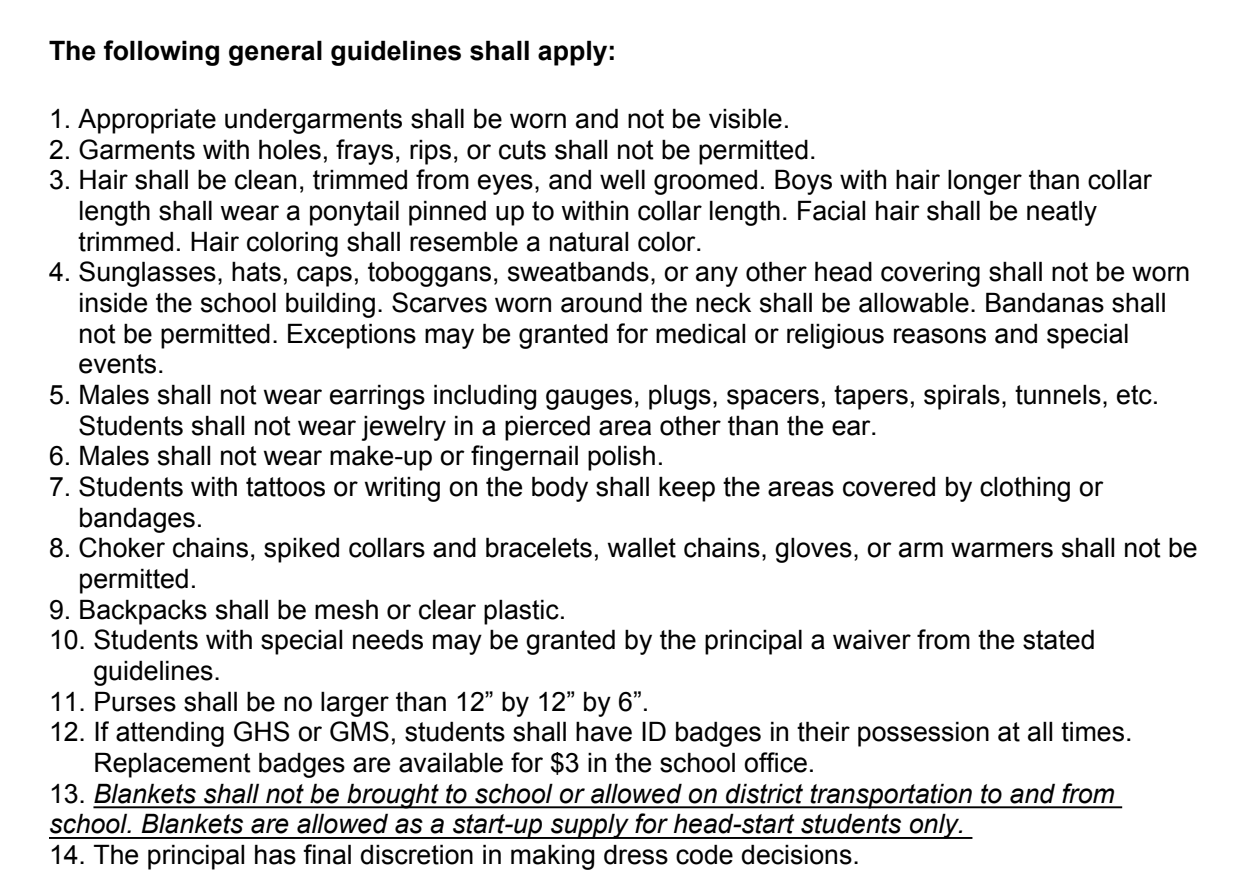
    Gladewater ISD Superintendent Sedric Clark vehemently denies Hooper’s claims and those of a civil rights attorney now representing her and her daughter, that K.J. was targeted because of her braids, adding that many students in the district wear braids. He insists that the principal’s issue was, and always had been, solely the student’s hair color and that she had stated such in both phone calls to Hooper.

    In a recording he provided to ESSENCE of the second call between Hooper and the principal, Bedair is heard requesting that K.J. cover her hair under her graduation cap for the ceremony, adding that if she chose not to, “due to it being the [school] year that it has [been], I’m not going to push the issue.”

    “Principal Bedair was simply attempting to address what she initially considered a violation of the GISD Student Dress Code that could keep Kienjanae from her well-earned opportunity to participate in the graduation ceremony with her classmates,” Clark says.

    He also confirmed that, upon further reflection, Bedair decided that K.J.’s hair color is “close enough to a natural hair color” and that she would be allowed to participate in Friday’s ceremony with her hair as is. “So far as we’re concerned, the child can walk with her classmates on Friday and we consider the matter resolved,” he says.

    Hooper’s attorney Waukeen McCoy, an East Texas native now based out of San Francisco, says neither he nor his client had been formally informed that K.J. would be allowed to walk without covering her hair. And that in an email correspondence with an attorney representing the school district on Tuesday he stated: “that’s not what her mother was told; she was told she would have to cover it up, so please clarify with me in writing that she can walk with any ‘Black’ hairstyle she wants. I did not get a response back.”

    K.J. says she doesn’t believe that she should be penalized, especially since in-school learning ended months ago and she’s also previously worn many different hairstyles at school, including honey-blonde braids, without issue. It’s confounding, she says, that school leaders would be concerned with her hair, a few days before the ceremony scheduled to take place on a local sports field.

    “We hadn’t been in school for months, so I dyed my hair red; but it’s not bright red it’s more like burgundy,” she says. “They’re saying it’s not okay because it’s not a ‘natural’ color, but I’ve seen some kids with blue and yellow hair and I haven’t heard anything about their parents getting calls. Since we’ve been out of school, a lot of kids have been dying their hair and getting tattoos and piercings. I had to sit 10 hours for these [braids] and now they’re calling me days before saying I need to take them out? They could have said something earlier; I don’t have time to get my hair done all over again.”

    (Courtesy of Kieana Hooper)

    K.J. says she’d never had any previous problems with the principal and that she hadn’t mentioned anything about her hairstyle when she’d seen her Friday at a community parade for graduates. K.J. says the local newspaper had even published a photo of her smiling and waving proudly perched atop a car in the parade, wearing her cap and gown.

    Since news of her situation spread throughout the sleepy Texas town located between Dallas and Shreveport, La., with a population of just more than 6,000, and about 73 percent white and 18 percent Black, she says many classmates had expressed solidarity personally and via social media, insisting she should keep her hair as is. Some of her Black classmates and former students, she says, have also confided that they’d faced similar treatment; including one who claims she transferred out of the school for the same reason.

    McCoy adds that people of color have lodged similar complaints against nearby Texas school districts. In fact, he’s still working to resolve a fall 2019 case with the Tatum Independent School District regarding two Black boys, a kindergartener and a pre-kindergartener, who were expelled because their long hair and braids respectively violated the dress code policy. McCoy says his team observed that other white male students with hair of similar lengths attended district schools.

    “I think that’s the problem; these rules are often subjective and lead to discrimination,” he says. “I don’t think there should any rules for someone’s hairstyle; it’s personal. But if there is a rule it should be applied to everyone.”

    Hooper says regardless of what the school district says, she is backing her daughter, adding that she was recently honored by the Ronald McDonald House for her academic success and community service work. She says K.J. also hopes to attend college to pursue a career as a high-risk pediatric nurse because she likes helping people.

     “With all that’s going on in the world right now, haven’t these kids been through enough,” she says. “My daughter should get to walk across that stage Friday night; after all of her hard work, she earned it. That’s what she deserves.”

    Chandra Thomas Whitfield is an award-winning multimedia journalist and a 2019-2020 fellow with the Leonard C. Goodman Institute for Investigative Reporting. She is the host and producer of In The Gap, a forthcoming podcast for In These Times Magazine about how the gender pay gap adversely impacts the lives of Black women in the American workforce. 

    The post East Texas Student Told Remove Braids Or No Graduation appeared first on Essence.