Category: African-American

  • Lauren London Joins ‘Red Table Talk’ To Talk Nipsey Hussle’s Legacy And Gun Violence

    Essence Magazine:

    In the wake of the deaths of George Floyd, Ahmaud Arbery, Breonna Taylor and countless others, many of us can say we are not ok right now. That is especially true for their loved ones.

    In a timely and impactful episode of Red Table Talk, host Jada Pinkett Smith sat down with Lauren London to talk about how she’s been processing grief after losing her partner Nipsey Hussle to gun violence last year.

    “For me, what’s really been important is connecting with God, and that’s been a struggle because something horrible happens in your eyes and you’re like, ‘How God?’,” the actress shared with Pinkett Smith. “It’s not easy. I don’t always wake up on the enlightened side of the bed, you know? And the days that I don’t, I let myself because I’m human. I’m gentle with myself. I find things that matter, and so I try to live with a purpose. When I’m having a bad day, I meditate. I go within.”

    What does help London cope is the love she gets from the people who Nipsey touched. “He’s touching people still,” London said. “I find that when I run into people that tell me how he’s changed their lives, what they’re doing with their life right now, it fills me up. He would have loved to hear that.”

    Later in the episode, Pinkett Smith and her mother Adrienne Banfield-Jones and daughter Willow Smith sit down with Erica Ford, a gun activist London was introduced to at a Puma charity event. Ford explains the complexity of how gun violence affects women.

    “First [there’s] the trauma of losing your soulmate, right? And then having to raise your children. I see women stop living,” Ford says. “I see them losing their lives from a broken heart. We teach them how to move past that pain. If you help the mother heal, you help save the family.”

    See the episode in full below:

    The post Lauren London Joins ‘Red Table Talk’ To Talk Nipsey Hussle’s Legacy And Gun Violence appeared first on Essence.

  • Surviving Workplace Whiteness: A Guide

    Essence Magazine:

    Working in America as a Black person on a typical day could be categorized as it’s own résumé-worthy skill. Navigating microaggressions, asserting meaningful opinions in meetings in just the right tone and balancing our personal identity alongside the confines of conservative professionalism. We code-switch to survive the workplace and that was all before COVID-19 drove us indoors, forced many of us to become essential and had its way with our communities.

    Post-COVID-19 life is ripe with new challenges to keep ourselves safe, to protect our families and communities and for those of us not impacted by furloughs and layoffs, to keep our jobs. The thing is, it is different now because piled atop the myriad of troubling pandemic statistics impacting the Black community, is a string of racist murders, many of which were committed (again) at the hands of police. So an already challenging 2020, has become a pressure-cooker of lost loved ones, lost members of our tribe, anger, protests, and economic impacts.

    Black people are exhausted.

    Yet, we are filing into workplaces, or logging onto virtual meetings and largely feeling like we have to pretend like there is nothing going on and it is business as usual. It is not business as usual. Our mental health is at stake each time we smile our way through the day and push the challenges down for the sake of maintaining sanity in environments where white culture is constantly elevated.

    For the sake of our well-being, let’s stop shoving our frustrations down and instead find techniques to help us feel better in the workplace.

    Below are five tips and techniques to help us to keep our sanity as we head into or log onto, our jobs.

    1. Use Your Allies

    If you are lucky enough to have a White friend at work, let them know when things are tough.  Many allies already know when their Black and Brown friends are facing a hard time, but don’t assume. Lean on your workplace support system and provide them guidance on how they can help you. Depending on your workplace culture, it could be as simple as them letting colleagues know that you aren’t up for video meetings. Use ally relationships if you’ve got them because, in addition to offering you some reprieve, their behavior teaches others how they should behave during times of national and global upset.

    2. Use Simple Course-correcting Language

    “How was your weekend?” “Oh, I see you’ve changed your hair!” “There is so much going on in the news, you must be so heartbroken.” During periods of major global unrest, remarks like this are tone-deaf and often rage-inducing. They force Black folks into discussions they shouldn’t be required to have. I recommend keeping a few easy replies that redirect or terminate the discussion, respectfully. When said with the right tone, everyone understands and it cuts down on the opportunity to be seen as the offensive Black person and you can also deliver these messages virtually. Here are two statements I often use:

    “Thank you for noticing.”  This simple statement says, I see you have made an observation without inviting additional discussion. Most people will gather from this response that you aren’t up for engaging, but you don’t want to be rude. There is also something about using “thank you” that tells people to say “you’re welcome,” and end the discussion or change the topic.“Say more about that.”  Redirects the conversation. When saying this in person, I make a point to look inquisitive and directly at the other party.  “Say more about that,” turns a rogue “how was your weekend” into an awkward self-realization for the asker and often results in an apology.

    3. Take Your Breaks

    Working through meals and breaks seems like it just comes with the territory in some companies. Stop doing that, even if you are at home. Take your breaks and mealtimes to recharge.  Maybe you download a quick meditation guide or you go outside for a safe socially distanced walk. You might go to the car and listen to your favorite station for a while.  Use your time to center yourself and recharge for the rest of your day. If you are working remotely, it is easy to skip meals and breaks. Make a point to treat yourself at breaks and mealtimes how you would treat an invited guest. Take your time, use the good plates and silverware instead of eating out of at box at your desk.

    4. Take a Day Off

    It seems obvious, but many of us feel like we can’t do this. If you have the time or can afford to take the break, take a day off when you need to. When you do decide to take an off day, break from everything: no news, no social media, no emotionally charged conversations. Step away from those parts of life that feel exhausting and use the time instead to do things that recharge you or make you feel loved.

    5. Prioritize Executing Over Meeting

    Can’t take the day off? Make it an “execution day.” After a particularly troubling series of events, having to talk in meetings can leave you completely zapped. When possible, move your meetings and give yourself a day to work on doing the actual work. Meetings are great for connecting and sharing ideas, but typically to get the job done, you will need concerted and uninterrupted time. Let leaders and colleagues know you need to focus on execution when you know you aren’t up for meetings.  This way, you can reduce the emotional distraction that can come with engaging with others after emotionally charged national events. 

    This year is shaping up to be one for the history books and we are living and working through challenges in real-time. As we all want to survive and thrive through this tough period, try to remember that it is important to find and use coping and survival tactics that do not require our silence. Use these tips to practice self-care and boundaries in environments where there will otherwise seem like there are none.

    The post Surviving Workplace Whiteness: A Guide appeared first on Essence.
  • Kanye West Named Forbes’ Highest Paid Musician Of 2020

    Essence Magazine:

    Controversy sells. Kanye West has been named Forbes’ annual highest-paid musician of 2020.

    The rapper and Yeezy designer also earned second place on the general highest-paid celebrity list with a reported income of $170 million. 

    Ahead of him on that list, sits his wife’s sister Kylie Jenner, who reportedly earned $590 million in large part to her popular cosmetics company. 

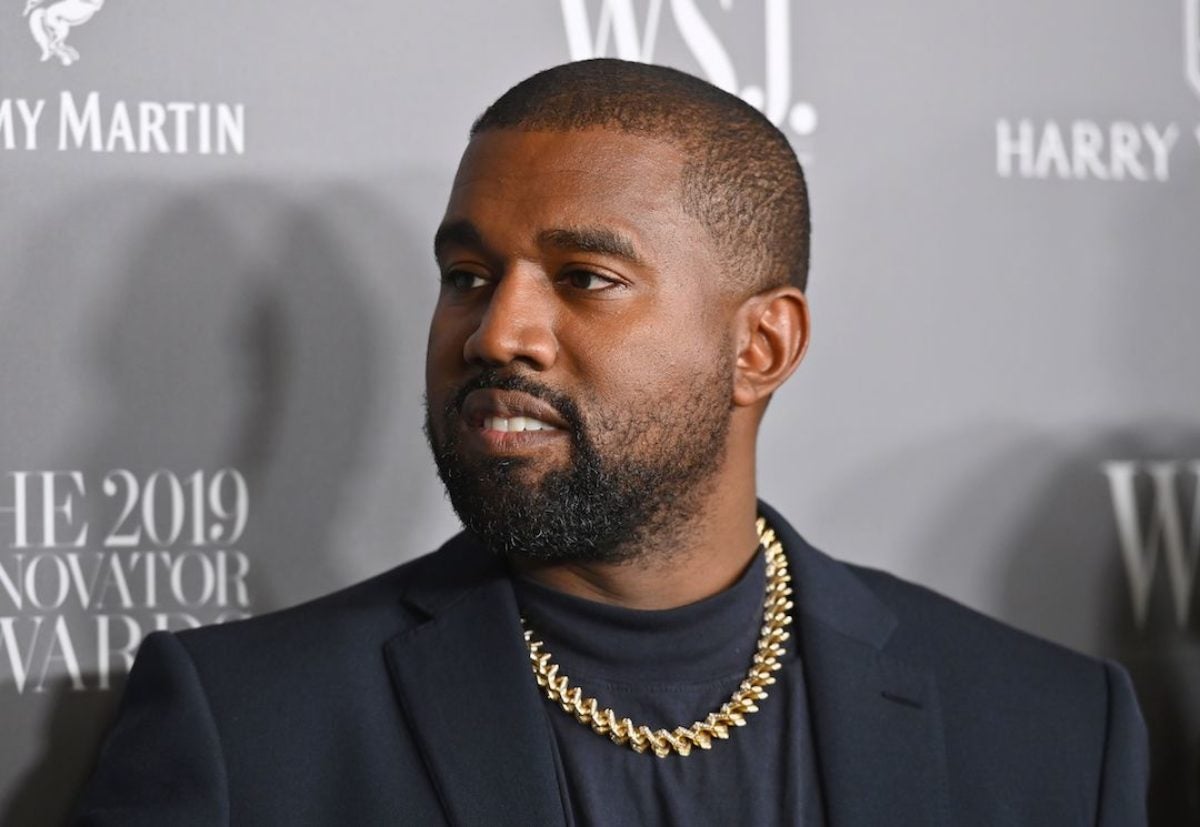
    Kanye WestUS rapper Kanye West attends the WSJ Magazine 2019 Innovator Awards at MOMA on November 6, 2019 in New York City. (Photo by Angela Weiss / AFP) (Photo by ANGELA WEISS/AFP via Getty Images)

    He beat out Elton John, Arianna Grande and the Jonas Brothers to land at the top slot. Other Black celebrities in the top ten: Tyler Perry (#6 at $97 million), LeBron James (#9 at $88.2 million) and Dwayne Johnson (#10 at $87.5 million).

    The list is being published at a precarious time in the music industry. The touring that heavily contributes to artists’ revenues has ceased as a response to the COVID-19 pandemic. 

    West, who publicly protested his absence from the magazine’s Billionaires list, provided the publication with ample receipts of his income.

    Kanye WestINDIO, CALIFORNIA – APRIL 21: Kanye West performs Sunday Service during the 2019 Coachella Valley Music And Arts Festival on April 21, 2019 in Indio, California. (Photo by Rich Fury/Getty Images for Coachella)

    According to The Hollywood Reporter, he mused about changing his name to Christian Genius Billionaire, lest anyone is confused about the state of his financial assets.

    Recently he has opted to put some of his well-publicized wealth to good use. According to CNN, he has gifted a $2 million donation to the surviving family members of police brutality victims George Floyd, Ahmaud Arbery and Breonna Taylor.

    The post Kanye West Named Forbes’ Highest Paid Musician Of 2020 appeared first on Essence.

  • Black Nurse, Leader And Legislator Wants Action To Keep Elections Safe For All Voters

    Essence Magazine:

    In March, I left my Memphis home for six weeks to join my nursing peers on the frontline of America’s COVID-19 pandemic in the ICU at Manhattan’s Bellevue Hospital. Experiences with those patients in New York will forever be etched in my mind – like the 25-year old man with no underlying health conditions who went into cardiac arrest and died as his mother wept on the floor of the hospital, or the patients in semi-private rooms who watched as roommates underwent advanced CPR, only to see their roommates end the night zipped in a body bag, waiting in the room for an overburdened coroner. One night, nurses fueled by adrenaline rushed from room to room to keep patients stable as the hospital ran out of oxygen because of the unprecedented number of ventilated patients.

    I never thought that we would live to see times like this. It was the most heart-wrenching experience in my ten years as a nurse. I left New York with a fire in my belly to do whatever I can to make sure this scene will not play out in other communities—especially in Tennessee where I serve as a State Senator.

    I am moving from the day-to-day fight on the frontlines at the hospital to the frontlines at the Tennessee Capitol. In each instance, it’s the people whose lives depend on my service, who remain at the forefront of my mind.  My objective for this legislative session is to ensure that Tennessee takes every step necessary to prevent and prepare for the deepening of this global health crisis. Every part of our society has had to urgently adapt and respond, and our elections are no exception.  We cannot allow the decisions made by the legislature to continue to be driven by politics and not by data and science.

    Tennessee’s elected leaders showed little urgency or interest in adapting our election rules to meet the sweeping tide of this pandemic. The inertia is unconscionable and disturbing. It took a court ruling to temporarily lift absentee voting restrictions, so that our elections are not set up for failure and communities are not forced to make an impossible choice: their vote or their health. 

    Voters must have a choice in how they cast a ballot while COVID-19 remains a threat. And we cannot allow the Governor, Secretary of State or the Republican Party to challenge this court ruling and take away the right to safely vote from our communities, as they did in Texas.

    We cannot allow a repeat of what we saw in Wisconsin to happen in Tennessee—or anywhere—in November. Wisconsin’s election in early April showed us all the dangers of failing to make changes in response to Coronavirus: 97% of Milwaukee’s polling places closed as poll workers quit, leaving voters to risk their health waiting in line for hours and voting in crowded places. Thousands more were not able to vote at all.

    Because of the court ruling, we are on the right path for safety holding elections.

    Tennessee has up to $55 million available in federal funding to invest in elections from both the Help America Vote Act and the Coronavirus Aid, Relief, and Economic Security (CARES) Act. Some of this funding is designated to improve the safety of Tennessee’s elections given the pandemic. We have the solutions and the resources to meet this challenging process. There is no reason why our state should not temporarily expand absentee voting so that all Tennesseans can safely make their voices heard this year.

    All voters—regardless of age, race, party, or the state they live in—should have equitable access to the ballot. Each of us has a voice, and in a democracy, every voice matters. Allowing all eligible Tennessee voters to cast an absentee ballot, if they choose, is a real goal we can accomplish together. On the other side of this crisis, when we look back and see that even in the midst of a global pandemic, our state’s democracy did not falter – we will be stronger for it.

    Katrina Robinson is a Tennessee State Senator, Registered Nurse, and Business Owner.

    The post Black Nurse, Leader And Legislator Wants Action To Keep Elections Safe For All Voters appeared first on Essence.

  • Father’s Day Gifts For The Techie Dad

    Essence Magazine:

    Buying a gift for a techie father isn’t always as easy as you think – especially ifhe’s an electronics buff who always treats himself to the latest releases. To make things easier, we’ve rounded up nine must-haves for your gadget-loving dad.

    The post Father’s Day Gifts For The Techie Dad appeared first on Essence.

  • Naeemah LaFond Offers Beauty Brands Guide To Support Black Creatives

    Essence Magazine:

    Naeemah LaFond joined the countless Black creatives calling for tangible and measurable change from beauty brands and industry decision makers this week. The highly sought after editorial hairstylist and Global Artistic Director for amika penned a guide book that lays out direct actions that those decision makers can take to support Black hairstylists, including advice about hiring practices, normalizing Black beauty, and education about Black hair.

    It comes on the heels of beauty brands making monetary donations to organizations such as Black Lives Matter, the NAACP, Color Of Change and more. Black creatives and Black brand owners are demanding longterm commitments to upending the current system that blocks opportunities for Black talent and essentially ignores the needs of Black consumers.

    “There’s a global conversation about racism and inequality that is taking place and I’m cautiously optimistic to see that my colleagues in the hair care industry have an open ear and are ready to join in on the conversation,” LaFond said. “I think that outside of what is being done in your personal lives to advocate for change and injustice towards black people, that there also needs to be an internal look at your professional spaces and the changes that need to be made there.”

    View this post on Instagram

    What I’m about to say here is long overdue. There’s a global conversation about racism and inequality that is taking place.I’m optimistic in knowing that my colleagues in the hair care industry and other industries that we contribute our work to have an open ear and are reaching out to me to find out how they can do better. I think that outside of what is being done in your personal lives to advocate for change and injustice towards black people, that there also needs to be an internal look at your professional spaces and the changes that need to be made there. I believe that the first step lies in recognizing the disproportionate lack of access that black people have to opportunities in this industry which lead to systemic and economic inequalities. I want to be proactive, so I’ve made a list of action steps that decision makers and leaders can follow in making a real change in our industry that goes beyond a social media post. We are at a historical moment and I along with many of my peers are open to having this conversation with you (as awkward as it may get) so that we can advance as an industry in a way that is in true representation of all of its artists. Our Industry as a collective needs to do better. Our craft is owed that. Let’s do the work. (Tag anyone you feel needs to see this/ fwd the information- repost it. All hands on deck.)

    A post shared by NAEEMAH LAFOND -HAIRSTYLIST (@naeemahlafond) on Jun 2, 2020 at 2:03pm PDT

    “I believe that the first step lies in recognizing the disproportionate lack of access that black people have to opportunities in this industry which lead to systematic and economic inequalities,” LaFond continued. “I want to be proactive, so I’ve made a list of ways that decision makers and leaders can help in making a real change in our industry that goes beyond a social media post. We are at a historical moment and I along with many of my peers are open to having this conversation with you (as awkward as it may get) so that we can advance as an industry in a way that is in true representation of all of its artists.”

    Many Black leaders in the beauty industry are pushing for their non-Black colleagues to go further than statements in support of Black Lives Matter on their social media. UOMA Beauty Founder and CEO Sharon Chuter launched the #PutUpOrShutUp campaign calling for beauty brands to disclose to the public the number of Black people they have working in corporate and leadership roles at their companies.

    Camara AUnique, celebrity makeup artist and owner of Camara AUnique Beauty, is adding her voice to the conversation by compiling a directory of more than 100 Black makeup artists and beauty influencers. In conjunction with LaFond’s guide book, it creates an environment where brands have no excuse to overlook Black creative talent.

    View this post on Instagram

    Tag Them! I’m putting a list together to share! For years Black Artists are not treated fairly and it’s time to bring change in the beauty community. My heart has always been for people. I will have something soon. I am TIRED. God is love and I’m always going to exude true love.

    A post shared by CAMARA AUNIQUE ™ (@camaraaunique) on Jun 3, 2020 at 3:03pm PDT

    “For years Black Artists are not treated fairly and it’s time to bring change in the beauty community,” AUnique said “My heart has always been for people.”

    So brand leaders not only have a way to understand how they can do better and act on their vows to support the Black community, they have resource that they can reference to find artists that they might not have been acquainted with otherwise.

    The post Naeemah LaFond Offers Beauty Brands Guide To Support Black Creatives appeared first on Essence.

  • Naeemah LaFond Offers Beauty Brands Guide To Support Black Creatives

    Essence Magazine:

    Naeemah LaFond joined the countless Black creatives calling for tangible and measurable change from beauty brands and industry decision makers this week. The highly sought after editorial hairstylist and Global Artistic Director for amika penned a guide book that lays out direct actions that those decision makers can take to support Black hairstylists, including advice about hiring practices, normalizing Black beauty, and education about Black hair.

    It comes on the heels of beauty brands making monetary donations to organizations such as Black Lives Matter, the NAACP, Color Of Change and more. Black creatives and Black brand owners are demanding longterm commitments to upending the current system that blocks opportunities for Black talent and essentially ignores the needs of Black consumers.

    “There’s a global conversation about racism and inequality that is taking place and I’m cautiously optimistic to see that my colleagues in the hair care industry have an open ear and are ready to join in on the conversation,” LaFond said. “I think that outside of what is being done in your personal lives to advocate for change and injustice towards black people, that there also needs to be an internal look at your professional spaces and the changes that need to be made there.”

    View this post on Instagram

    What I’m about to say here is long overdue. There’s a global conversation about racism and inequality that is taking place.I’m optimistic in knowing that my colleagues in the hair care industry and other industries that we contribute our work to have an open ear and are reaching out to me to find out how they can do better. I think that outside of what is being done in your personal lives to advocate for change and injustice towards black people, that there also needs to be an internal look at your professional spaces and the changes that need to be made there. I believe that the first step lies in recognizing the disproportionate lack of access that black people have to opportunities in this industry which lead to systemic and economic inequalities. I want to be proactive, so I’ve made a list of action steps that decision makers and leaders can follow in making a real change in our industry that goes beyond a social media post. We are at a historical moment and I along with many of my peers are open to having this conversation with you (as awkward as it may get) so that we can advance as an industry in a way that is in true representation of all of its artists. Our Industry as a collective needs to do better. Our craft is owed that. Let’s do the work. (Tag anyone you feel needs to see this/ fwd the information- repost it. All hands on deck.)

    A post shared by NAEEMAH LAFOND -HAIRSTYLIST (@naeemahlafond) on Jun 2, 2020 at 2:03pm PDT

    “I believe that the first step lies in recognizing the disproportionate lack of access that black people have to opportunities in this industry which lead to systematic and economic inequalities,” LaFond continued. “I want to be proactive, so I’ve made a list of ways that decision makers and leaders can help in making a real change in our industry that goes beyond a social media post. We are at a historical moment and I along with many of my peers are open to having this conversation with you (as awkward as it may get) so that we can advance as an industry in a way that is in true representation of all of its artists.”

    Many Black leaders in the beauty industry are pushing for their non-Black colleagues to go further than statements in support of Black Lives Matter on their social media. UOMA Beauty Founder and CEO Sharon Chuter launched the #PutUpOrShutUp campaign calling for beauty brands to disclose to the public the number of Black people they have working in corporate and leadership roles at their companies.

    Camara AUnique, celebrity makeup artist and owner of Camara AUnique Beauty, is adding her voice to the conversation by compiling a directory of more than 100 Black makeup artists and beauty influencers. In conjunction with LaFond’s guide book, it creates an environment where brands have no excuse to overlook Black creative talent.

    View this post on Instagram

    Tag Them! I’m putting a list together to share! For years Black Artists are not treated fairly and it’s time to bring change in the beauty community. My heart has always been for people. I will have something soon. I am TIRED. God is love and I’m always going to exude true love.

    A post shared by CAMARA AUNIQUE ™ (@camaraaunique) on Jun 3, 2020 at 3:03pm PDT

    “For years Black Artists are not treated fairly and it’s time to bring change in the beauty community,” AUnique said “My heart has always been for people.”

    So brand leaders not only have a way to understand how they can do better and act on their vows to support the Black community, they have resource that they can reference to find artists that they might not have been acquainted with otherwise.

    The post Naeemah LaFond Offers Beauty Brands Guide To Support Black Creatives appeared first on Essence.

  • Gabrielle Union Accuses NBC Entertainment Chairman Of ‘Racial Bullying’ In Discrimination Complaint

    Essence Magazine:

    Gabrielle Union is again using her voice to take action. 

    After revealing details of the “toxic” work environment on the NBC series, America’s Got Talent, that made her become physically ill, the actress has filed a harassment complaint against the producers and network behind the show. In addition to the complaint, Union raised a new accusation that NBC Entertainment Chairman Paul Telegdy threatened her over speaking out against racism on set.

    Unions’ attorney Bryan Freedman filed the complaint on Thursday with California’s Department of Fair Employment and Housing, naming producers FremantleMedia and Simon Cowell’s Syco as well as NBCUniversal, Variety confirmed. 

    “When Gabrielle Union informed NBC of racially offensive conduct during the taping of America’s Got Talent, NBC did not ‘stand’ with her in ‘outrage at acts of racism,’” Freedman said, invoking the company’s recent support of #BlackLivesMatter. 

    pic.twitter.com/RYouycx8oQ

    — NBC Entertainment (@nbc) June 1, 2020

    “Instead, NBC did not care enough to either promptly investigate Ms. Union’s complaints or even ask HR to get involved,” the complaint continued. “Rather, NBC stood against her and directed its ‘outrage’ at Ms. Union for whistleblowing about the racially offensive conduct she experienced while working for NBC on America’s Got Talent.”

    Freeman added that it “truly an ‘outrage’” when “Paul Telegdy, Chairman of NBC Entertainment, actually threatened Ms. Union in an attempt to silence her from telling the truth about racist actions that took place on the show. There is no place for this type of racial bullying in the workplace, and it is going to take more than a Tweet from NBC to demonstrate that NBC intends to create an environment free from racism.”

    This is just the first step in holding NBC responsible through the means of a formal lawsuit or arbitration — so Black talent employed by the network doesn’t have to face racial discrimination moving forward.

    The irony of it all, which the complaint noted, is that just this week NBC posted what some are calling a “performative” statement, taking a stand against racial injustice in light of the recent George Floyd protests — when they’ve got much work to do when it comes to fair treatment of Black employees on their own network.

    So far, NBCUniversal, Fremantle and Cowell have not commented on the complaint, but previously a joint statement interestingly claimed “no one associated with the show made any insensitive or derogatory remarks about Ms. Union’s appearance, and that neither race nor gender was a contributing factor in the advancement or elimination of contestants at any time.”

    “The investigation has shown that the concerns raised by Ms. Union had no bearing on the decision not to exercise the option on her contract,” the statement added.

    Let’s hope NBC keeps the same energy when it comes to standing behind Union through this next phase of the process.

    The post Gabrielle Union Accuses NBC Entertainment Chairman Of ‘Racial Bullying’ In Discrimination Complaint appeared first on Essence.

  • Here’s How You Can Talk To Your Kids About Racism

    Essence Magazine:

    In a world where little Black boys and girls are being stripped of their innocence because of a society that sees them for everything other than exactly what they are — kids — parents have the daunting task of educating their children about life ahead. With nationwide protests following the death of George Floyd as the backdrop to an already confusing time in the world, the conversations will likely have to come sooner rather than later. It’s not only recommended — it’s critical.

    Studies from Harvard University suggest that children as young as three years old, when exposed to racism and prejudice, tended to embrace and accept it, even though they might not entirely understand what they were feeling. Therefore these conversations are essential for all parents to have, because it provides the framework and foundation for what it’s like to grow up Black in America. 

    Nyasha Chikowore, M.S., clinical psychology doctoral extern at Capital Center for Psychotherapy & Wellness in Washington, D.C. and author of children’s book Giraffe Asks For Help, offers a few tips for Black parents to help their children navigate an overwhelming reality and also provide hope for a joyful future among these dark times.

    Acknowledge that it’s a difficult conversation.

    Many parents may want to avoid difficult conversations, but now isn’t the time to stay silent. Children are likely already seeing and hearing about the highly publicized murders of Ahmaud Arbery, Breonna Taylor and George Floyd and likely have questions. As a Black parent, it’s up to you to frame the narrative on what really happened to these Black lives, and explain to them how in a country that may not believe they matter — they do. “There aren’t many ways to make racism a fun and flowery conversation, and kids can tell when you’re not being completely honest with them,” says Chikowore. “Letting them know that the topic may be hard to understand and can make them feel sad or confused will also let them know it’s okay for them to emote. Kids are good at masking their emotions based on cues from their parents; this is a conversation that requires transparency and openness.”

    Use children’s books. 

    Don’t know where to start? Books can often provide the words and images that may be too difficult for you to speak while you’re doing your own processing of what’s going on in the world. They are a great first step in tackling tough topics and exposing children to different narratives. Chikowore agrees, “Reading younger children’s stories is always a great way to broach a tough conversation, and help them understand a topic based on their reading level. There are book lists available, of which many focus on historical figures like Dr. Martin Luther King, Jr and Malcolm X that can help them understand significant historical events.”

    Give them hope.

    “The conversation, although a tough one, doesn’t need to be all doom and gloom,” says Chikowore. “It’s important to let them know that there are many people, including their own parents and family members, who are working hard to change things. Considering children have also been attending protests or may be hearing about it in conversations, the purpose of these events can also be explained.” Remember, this conversation will shape your child’s life, their future interactions and their way of thinking — you don’t want to take all of their joy away from them.

    Use real life examples.

    It may get a bit messy, but the best way to explain things to your children is by actually sharing things with them that you’ve personally experienced. That way they get it more. “Parents have an affinity for the “when I was your age” talks, which in this instance could be more productive than not,” says Chikowore. “Racism shows up in different ways from the larger systemic level to the one-on-one interactions. Examples of how it’s shown up in your life can help children understand racism as more than the injustice being highlighted on the news.”

    The post Here’s How You Can Talk To Your Kids About Racism appeared first on Essence.